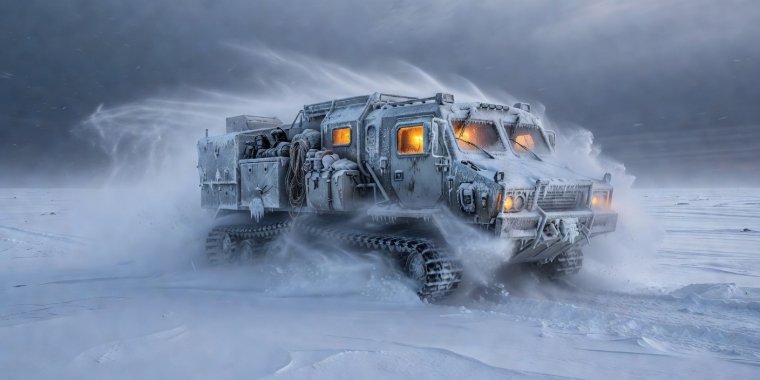
Extreme Climate Insulation: Shielding the Habitat
Expedition habitats must endure external temperature swings of nearly 100 degrees Celsius across seasonal operations. Constructing a true four-season living shell requires complete elimination of thermal bridges, specialized polyurethane sandwich construction, and redundant hydronic heating.
The Physics of Cold Bridges and Internal Condensation
In conventional motorhomes and caravan trailers, walls are frequently framed with aluminum or timber battens sheathed in thin sheet metal. In sub-zero weather, metal framing members act as thermal bridges: they conduct interior heat directly to the freezing exterior atmosphere.
When warm, humid cabin air contacts these cold interior framing strips, water vapor condenses instantly into liquid drops. Over weeks of winter travel, this hidden condensation fuels mold growth, rots interior cabinetry, and eventually short-circuits hidden electrical runs behind wall linings. In -40°C conditions, condensation can freeze into thick sheets of interior frost along metal wall joints.
True expedition boxes eliminate metallic framing entirely. The walls, floor, and roof are constructed as self-supporting composite sandwich panels that join together using interlocking polyurethane step-joints and high-tensile structural adhesives.
Anatomy of a High-Performance GRP Sandwich Panel
Modern severe-duty expedition shells utilize three-layer composite sandwich construction:
- Outer Skin: 2.0 to 3.0 mm of woven Glass Reinforced Polyester (GRP) resin with an integrated UV-stabilized gelcoat layer. GRP resists hail stone impacts, tree branch scraping, and road salt corrosion without denting or pitting.
- Insulative Core: 50 to 80 mm of high-density closed-cell Polyurethane (PU) or extruded polystyrene (XPS) rigid foam (typically 35 to 45 kg/m³ density). The closed-cell structure prevents water absorption even if the outer gelcoat is pierced.
- Inner Skin: 1.5 to 2.0 mm woven GRP finished with washable polyurethane paint, providing a durable, easily sanitized interior surface.
Thermal Performance Metric: U-Values
A high-end 60 mm composite panel achieves a thermal transmittance (U-value) of approximately 0.44 W/(m²·K). An 80 mm extreme-Arctic panel achieves 0.32 W/(m²·K). By comparison, standard factory cargo van walls with basic insulation typically exceed 1.80 W/(m²·K), resulting in continuous thermal leakage that quickly overpowers auxiliary heating systems.
Double-Floor Basement Architecture
One of the hallmark engineering features of a global expedition truck is the heated double floor. Rather than mounting freshwater tanks, greywater lines, pumps, and battery banks underneath the exposed chassis frame where sub-zero airflow would freeze them solid, all critical plumbing and storage tanks are positioned within a 250 to 400 mm interior basement space.
Warm air from the hydronic heating system circulates continuously through this lower basement compartment before rising into the living area. Even when driving through -45°C blizzards in the Yukon or Northern Scandinavia, the fresh water supply remains at a comfortable +15°C, completely immune to freeze-thaw damage.
Hydronic Heating vs. Forced-Air Blowers
While basic campers rely on forced-air blown heaters, severe-climate expedition platforms exclusively specify hydronic diesel heating systems (such as Webasto Thermo Pro or Eberspächer Hydronic units).
| Feature Metric | Hydronic Liquid Heating (Expedition Standard) | Direct Forced-Air Blower (Standard Camper) |
|---|---|---|
| Heat Transfer Medium | Circulating glycol coolant through copper finned radiators | High-velocity heated dry air blasted through plastic ducts |
| Interior Air Quality | Silent natural convective heat; zero dust circulation; ideal humidity | Noisy blower fans; dries air; blows dust and pet hair into cabin |
| Engine Pre-Heating | Integrated heat exchanger allows cabin to warm the truck engine block | Cannot preheat engine; truck must cold-start in sub-zero weather |
| Domestic Hot Water | Continuous on-demand hot water via plate heat exchanger | Limited to small 10-litre electric/gas storage tanks |
| Redundancy Rating | Dual boiler units can be plumbed in parallel for fail-safe heat | Single blower failure leaves entire habitat without heat |
High-Altitude Operation & Altitude Adjustment Kits
Traversing the Tibetan Plateau, the Pamir Highway, or the Altiplano in Bolivia takes expedition vehicles above 4,500 meters (14,700 feet). At these altitudes, atmospheric oxygen density drops by nearly 40%.
Standard diesel combustion heaters operating at high altitude suffer from rich fuel mixtures, resulting in heavy carbon soot accumulation on flame sensors and glow plugs that shuts down heating within 48 hours. Expedition heaters must feature automated barometric sensors that dial back the diesel metering pump frequency as altitude increases, ensuring clean, soot-free combustion up to 5,500 meters above sea level.
Have Technical Field Inquiries?
Review our complete operational FAQ covering gross weight classifications, license requirements, and fuel logistics across global borders.
Browse Operational FAQ