
Heavy Expedition Platforms Built for Planetary Extremes
Navigating unmapped interior terrain demands more than recreational camper conversions. Real planetary mobility requires rigid structural ratings, multi-axle driveline reliability, independent thermal envelopes, and kinetic isolation systems able to survive sustained torsional deformation.
Engineering Principles for Deep Field Self-Reliance
Expedition rigs engineered for transcontinental crossings exist in an operational space distinct from recreational vehicles. When entering regions such as the Taklamakan Desert, the Siberian Taiga, or the high Andean plateaus, mechanical failure cannot be resolved with roadside recovery. Every platform relies on heavy industrial commercial vehicle architectures designed for logging, mining, and military prime movers.
The fundamental trade-off in extreme vehicle fabrication balances structural rigidity against intentional chassis compliance. Unlike a unibody passenger car that absorbs stress by resisting flex, heavy cross-country trucks utilize ladder-frame rails engineered to twist diagonally under extreme articulation. If a rigid composite habitat box were fastened directly to such a flexing chassis, the composite panels would delaminate, tear open at structural seams, and shatter window seals within hours of track travel.
Overcoming this mechanical friction requires strict modular engineering. Fabricators separate the machine into three isolated operational domains: the motive rolling chassis, the kinetic kinematic interface, and the autonomous environmental shell.
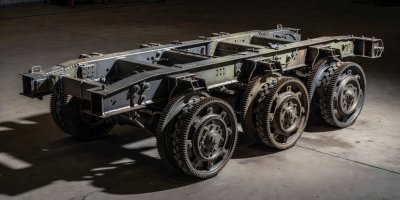
Heavy Commercial & Military Chassis Selection
Examine why platforms like the Mercedes-Benz Zetros, MAN TGS 4x4/6x6, Tatra Phoenix with backbone tube chassis, and Scania XT serve as the structural backbone for global expeditions. Hub reduction gears and pneumatic diff-locks dissected.
Inspect Platform Specs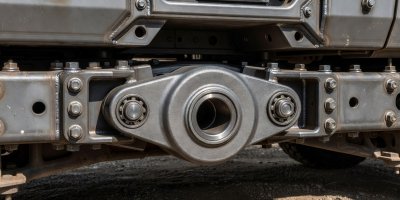
Torsion-Free Kinetic Subframe Geometry
Preventing box destruction requires diamond mounts, 3-point pivots, or 4-point central rocker arrangements that permit up to 30 degrees of frame twisting while maintaining absolute neutrality for the living compartment.
Analyze Mounting Systems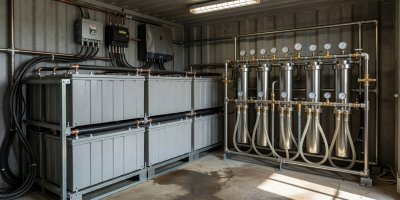
Energy Storage, Desalination & Fluid Logistics
Deep field self-reliance mandates redundancy: dual alternators, high-yield solar arrays, LiFePO4 thermal-managed cells, multi-stage water filtration with UV purification, and multi-tank diesel logistics.
Review Life Support Specs
Extreme Climate Insulation & Shell Fabrication
Operating reliably from -45°C Arctic passes to +52°C hyper-arid deserts requires cold-bridge-free GRP sandwich panels, dual hydronic coolant circuits, and pressurized anti-dust seals.
Explore Envelope EngineeringCritical Engineering Tolerances & Weight Ratings
Payload miscalculation is the primary reason off-road builds fail in extreme terrain. Overloading the rear overhang compromises steer-axle traction on steep ascents, while improper center of gravity calculation leads to rollover hazard during cross-slope traverses.
| Platform Class | Typical GVWR | Axle Configuration | Kinematic Mount Type | Minimum Articulation Range |
|---|---|---|---|---|
| Light Heavyweight | 7.5 to 10.0 Tonnes | 4x4 Single Rear Wheel | 4-Point Diamond Pivot | 400 mm Diagonal Cross-Axle |
| Medium Prime Mover | 14.0 to 18.0 Tonnes | 4x4 Heavy Planetary | 3-Point Central Bearing | 550 mm Diagonal Cross-Axle |
| Heavy Continuous Duty | 22.0 to 26.0 Tonnes | 6x6 Walking Beam / Bogie | 4-Point Double Rocker | 700 mm Inter-Axle Walking |
| Ultra-Heavy Planetary | 32.0 to 40.0 Tonnes | 8x8 Multi-Steer Planetary | Multi-Point Hydraulic Balance | 850 mm Extreme Traverse Limit |